SAW
Submerged Arc Welding (SAW) Machines
Engineered, built and tested in India and configured to your job, with installation, operator training and service from the team that built it.
RA Machine is the CNC machine division of R.A. Auto Engineering Works, an engineering company in Kolkata, India, founded in 1989 and building machines since 2008. We make CNC laser and plasma cutting machines, MIG, TIG, MMA and submerged arc welding machines, and cobot and robotic welding systems, and supply them across India and abroad. We are GST registered, hold an Import Export Code for export, and have supplied Indian Railways since 2022 as a preferred vendor for certain safety-critical items. Our Submerged Arc Welding (SAW) Machines are designed, built and supported by our own team in India, for buyers across India and abroad. More about RA Machine
Specifications
The range
Submerged arc welding (SAW) is an automatic process in which the arc burns under a blanket of granular flux, fed by a continuous wire electrode. It deposits weld metal quickly with deep penetration, a smooth bead and almost no visible arc, spatter or fume, which makes it the standard method for long seams on thick plate. RA Machine builds SAW machines for 440 V supply and customises each to the buyer's work: the type of seam, the size of the job, and how the welding head and workpiece are to move.
- Supply
- 440 V
- Configuration
- Customisable
Every machine is configured to the job it will do. Send us your material, thickness and production volume and we will recommend and quote the right configuration.
Request a Quote
For Submerged Arc Welding (SAW) Machines. Each machine is configured to the job, so tell us your material, thickness and volume and we will specify and quote it.
Fill form instead
Thank you — your enquiry has been sent.
Our sales team will get back to you shortly, usually within one working day.
Where it's used
Applications
Pressure vessels and boilers
Storage tanks and silos
Large-diameter pipe fabrication
Structural beams, columns and plate girders
Wind tower sections
Shipbuilding and barge panels
Railway wagon fabrication
Heavy engineering and earthmoving equipment
Hardfacing and build-up of worn rollers and shafts
How it works
The engineering
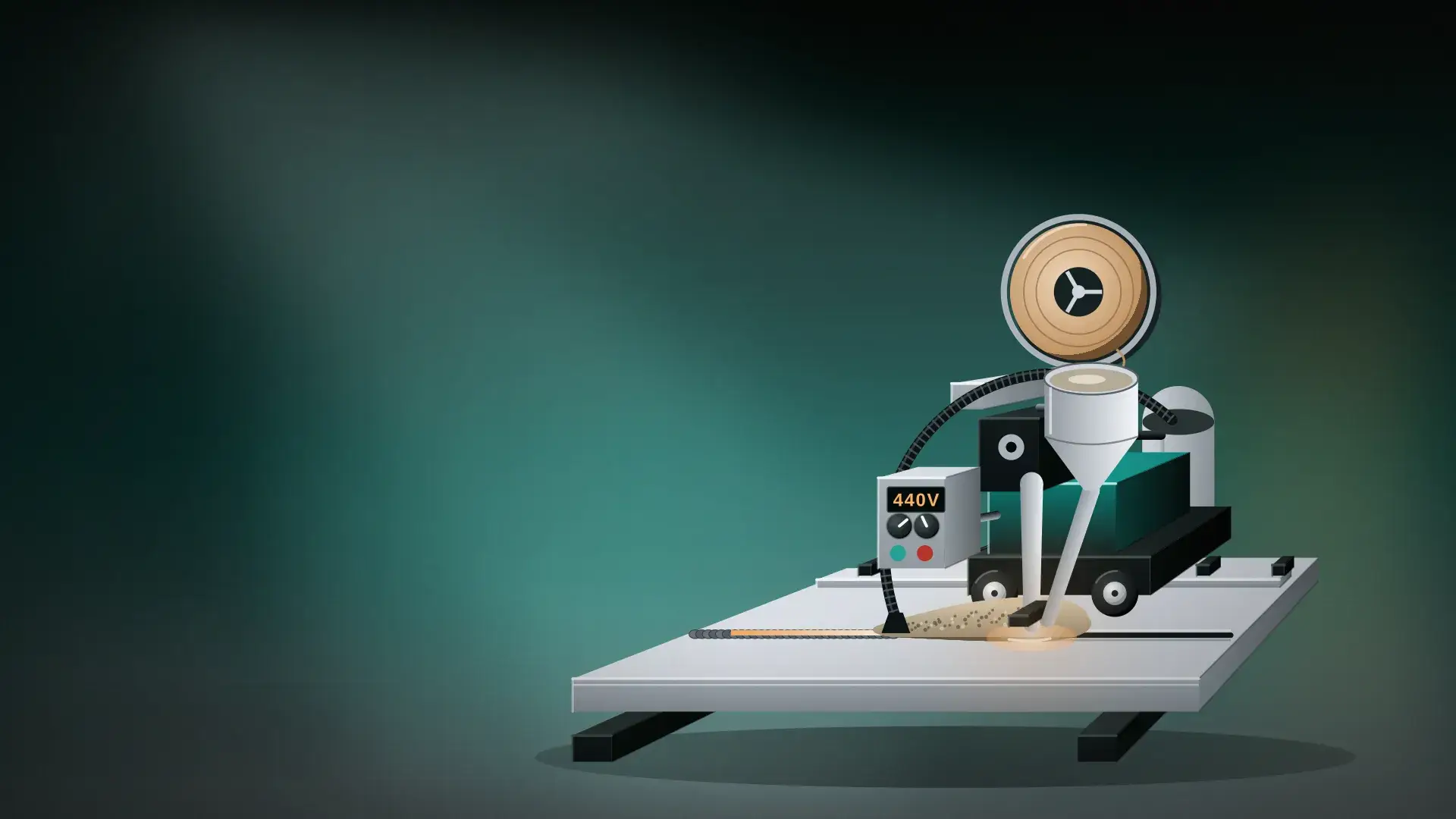
In submerged arc welding, a wire electrode is fed continuously from a spool into the joint while a hopper lays granular flux ahead of it. The arc forms between the wire and the workpiece beneath that flux layer. The flux melts to shield the weld pool and forms a slag that protects the bead as it cools, and the unmelted flux is recovered and reused. Because the arc is buried, there is no visible arc flash and very little spatter or fume, and the welding head travels at a steady, mechanised speed.
SAW beats MIG on long, straight or circumferential seams in thick material. It deposits far more weld metal per hour, penetrates deeply so thick joints need fewer passes, and produces consistent, smooth beads that need little cleaning. MIG remains the better choice for short welds, complex shapes, thin sheet and vertical or overhead positions, because SAW works only in the flat position, or on horizontal fillets, where the flux can lie on the joint.
A SAW machine is less a single welding set than a system: the power source, the wire feeder and welding head, flux handling and recovery, and the equipment that moves either the head or the work. Longitudinal seams are usually welded with a tractor running along the joint or a column-and-boom carrying the head; circumferential seams on shells and pipes use rotators or positioners turning the work beneath a fixed head. The job decides which of these you need and the size of work they must handle.
SAW is used mainly on carbon and low-alloy steels, and also on stainless steel with matching wire and flux. Wire and flux are chosen together to give the weld chemistry and toughness the job requires, which is why pressure vessel and structural fabricators specify them carefully. Joint preparation and fit-up matter, because SAW rewards clean, well-aligned joints.
The machine runs on 440 V three-phase supply, which suits the continuous, high-output welding SAW is used for. Running costs are electricity, wire and flux, reduced by reusing recovered flux. Because the operator supervises the weld rather than holding a torch, fatigue is lower and quality depends far less on individual hand skill.
RA Machine engineers, builds and tests its SAW machines in India and customises each to the buyer's seams, job sizes and handling equipment. Installation, commissioning and operator training are part of the supply, covering parameter setting, flux handling and safe operation, with spares, remote diagnostics and service visits afterwards. For shorter welds and general fabrication, our MIG, TIG and MMA machines are the better fit.
Our range
Other technologies
CNC Fiber Laser Cutting Machines
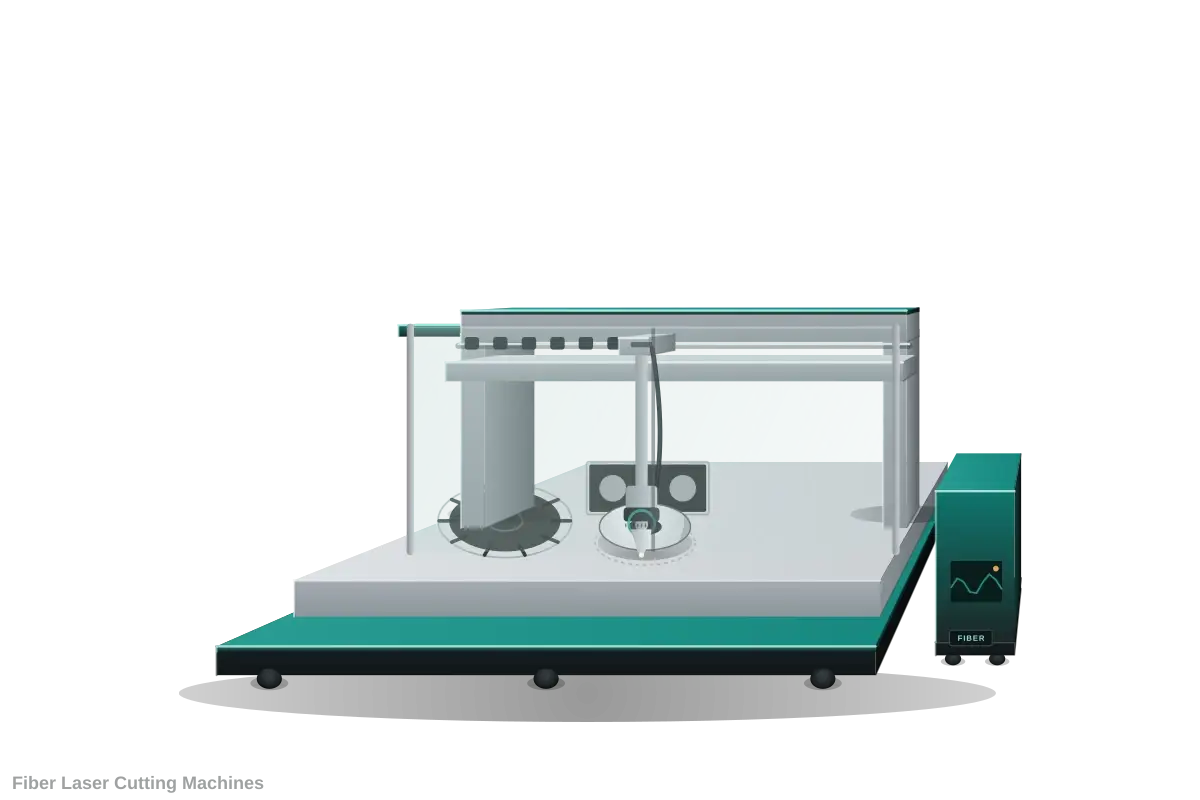
CNC fiber laser cutting machines from 1.5 kW to 30 kW, engineered and built in India for sheet and plate fabrication. Installation and training included.
1.5–30 kWlaser power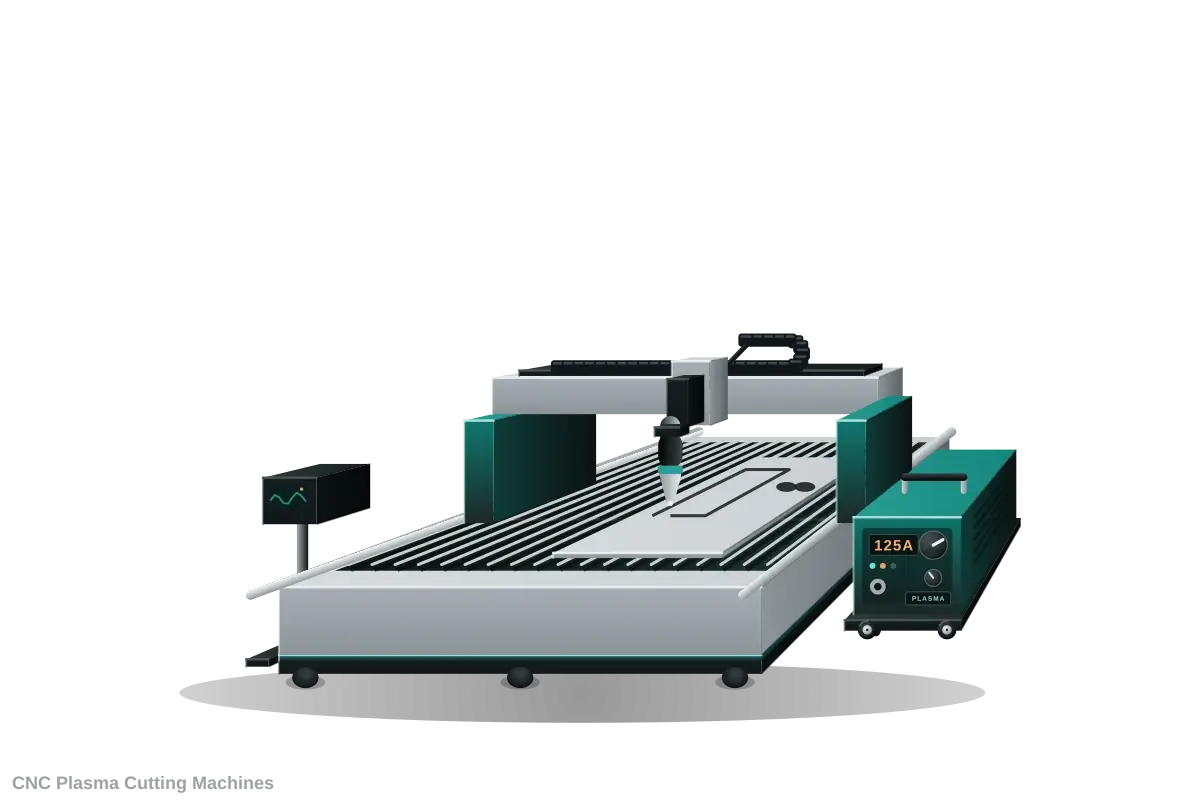
CNC Plasma Cutting Machines
CNC plasma cutting machines from 100 A to 200 A, cutting metal from 2 mm to 25 mm. Engineered and built in India, with installation and operator training.
100–200 Aplasma current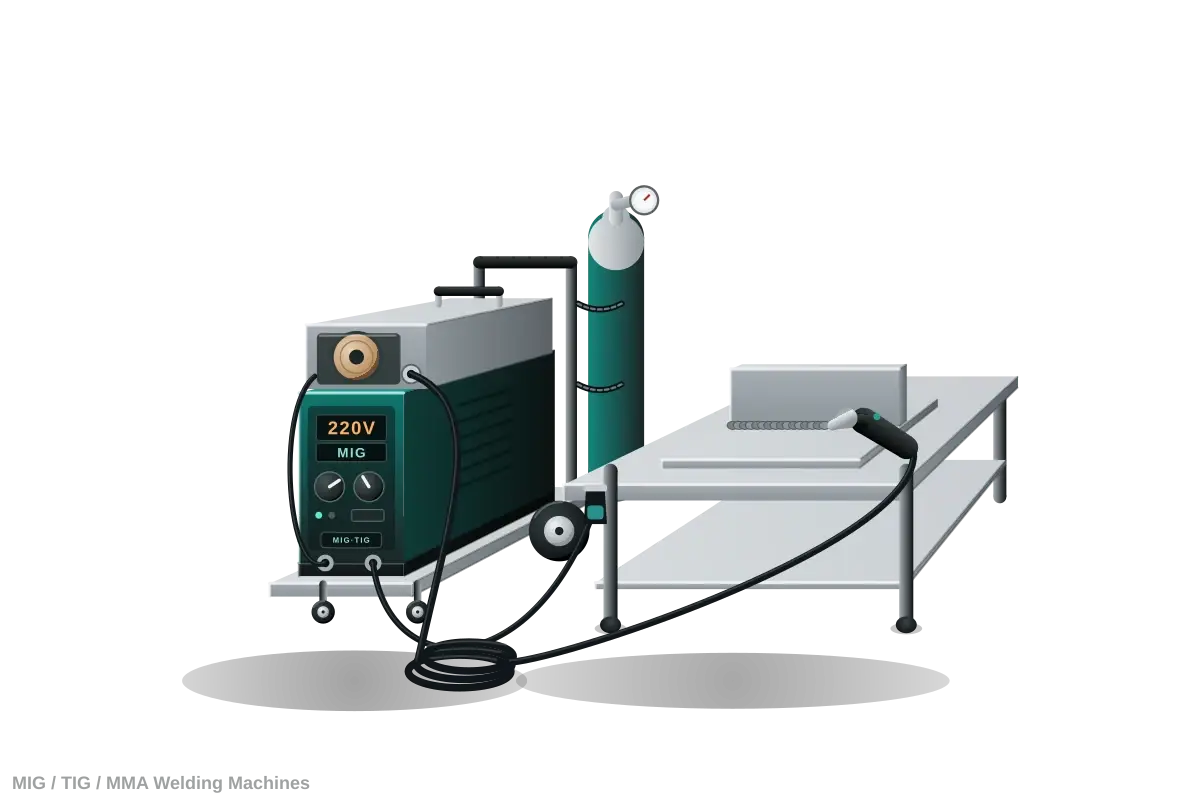
MIG, TIG & Arc (MMA) Welding Machines
MIG, TIG and MMA arc welding machines for 220 V and 440 V supply, customisable to your work. Engineered and built in India, with installation and training.
MIG · TIG · MMAprocesses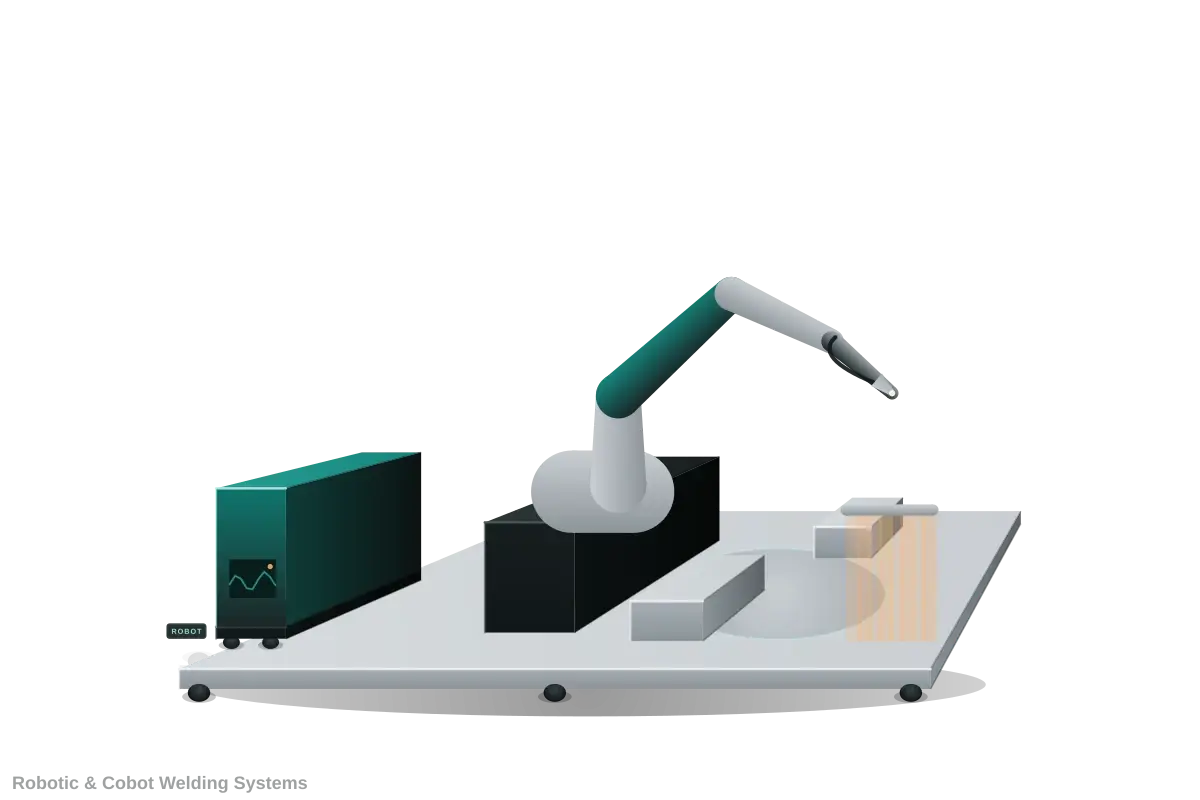
Cobot & Robotic Welding Systems
Cobot and industrial robotic welding systems, configured to your parts and volumes. Engineered and built in India, with installation and operator training.
Built to briefconfigurationFAQ
Questions about Submerged Arc Welding (SAW) Machines
What jobs is SAW best for?
SAW suits long, continuous welds on thick steel: longitudinal and circumferential seams on pressure vessels, boilers, tanks and pipes, and the web-to-flange joints of beams, columns and plate girders. It also suits hardfacing and build-up of worn rollers and shafts. Wherever the same long seam is welded repeatedly in the flat position, SAW delivers high deposition and consistent quality with little cleaning afterwards.
Does SAW work on 440 V three-phase supply?
Yes. RA Machine's SAW machines are built for 440 V supply, the three-phase industrial connection most Indian factories already have. SAW draws heavy current for long periods, so a three-phase supply is the practical choice. Before installation we check your incoming supply, cabling and earthing so the machine runs reliably. If your site has a different arrangement, tell us at the enquiry stage, because the configuration is customisable.
When should I choose SAW instead of MIG welding?
Choose SAW when your work involves long seams on thick plate that can be welded in the flat position, and when the volume justifies a mechanised setup. It deposits metal faster, penetrates deeper and gives smoother, more consistent beads than manual MIG. Choose MIG for short welds, complex shapes, thinner material and positional welding, where SAW's flux blanket and travel equipment are impractical.
Can submerged arc welding be done in all positions?
No. Because the arc is buried under loose granular flux, SAW is limited to the flat position and horizontal fillet welds, where gravity keeps the flux on the joint. Circumferential seams are welded flat by turning the work on rotators beneath a fixed head. Vertical and overhead welds are better done with MIG, TIG or MMA, which is why most fabrication shops use SAW alongside them.
What is the flux for, and can it be reused?
The flux shields the arc and weld pool from the air, adds alloying elements in some grades, and forms a slag that protects the bead as it cools. Only part of it melts. The unmelted flux is collected, usually by a recovery system, sieved and returned to the hopper. It must be kept dry, because moisture causes porosity, so storage and handling are covered in training.
What equipment do I need around a SAW machine?
That depends on the seams you weld. Longitudinal seams usually need a welding tractor or a column-and-boom to carry the head along the joint. Circumferential seams need rotators or a positioner to turn the shell or pipe beneath the head. Flux recovery and fixtures complete the setup. We customise the system to your job sizes and include installation, commissioning and operator training with it.
Talk to us about Submerged Arc Welding (SAW) Machines
Tell us your material, thickness and production volume and we will recommend the right configuration.