
Buyer guide
220 V vs 440 V Welding Machines: Which Supply Do You Need?
RA Machine · Updated
What do 220 V and 440 V actually mean?
In India, welding machines are commonly described as 220 V or 440 V, and these labels are really shorthand for two kinds of supply. A 220 V machine runs from a single-phase connection, the kind found in homes, shops and small workshops. A 440 V machine runs from a three-phase industrial connection, the kind most factories have. The nominal standard values are 230 V single-phase and 415 V three-phase, and the actual voltage at a site varies around those figures, but the 220 V and 440 V names have stuck in everyday use.
Elsewhere in the world the numbers differ. Many countries use different single-phase and three-phase voltages, and some run at 60 Hz rather than the 50 Hz used in India. If you are buying from outside India, state your local voltage, number of phases and frequency at the enquiry stage, so the machine is configured to the supply you actually have.
How does the supply affect a welding machine?
Welding takes a lot of power for as long as the arc is burning. A machine on a single-phase supply has to draw all of that through one phase, which means a high current in the supply cable and the protective devices. On a three-phase supply the load is shared across three phases, so each phase carries less current for the same welding output, and the load on the building's supply stays balanced.
In practical terms, three-phase machines comfortably deliver higher welding output for longer periods. Single-phase machines are well suited to lighter work and intermittent welding, but if pushed hard on a weak supply they can trip breakers, cause voltage drops that affect other equipment, and reach their thermal limits sooner. Modern inverter machines are far more efficient than older transformer sets on either supply, which has widened what a single-phase machine can sensibly do.
When is a 220 V single-phase machine the right choice?
A 220 V machine makes sense where three-phase power is not available or not convenient. That includes small fabrication shops, maintenance and repair teams inside larger plants, farm and rural workshops, training rooms and site work where the machine is carried from one job to the next and plugged into whatever supply is there.
It is also a sensible choice when welding is intermittent, such as tacking, short repairs and light fabrication on thinner sections, where the machine spends much of the day idle between jobs. Many single-phase machines are lighter and easier to move, which matters to maintenance crews. Generator operation is also common, provided the generator is properly sized for a welding load.
Having three-phase power in the building does not rule out a single-phase machine. Many factories keep one or two portable 220 V sets for maintenance and odd jobs alongside their three-phase production machines, simply because they are easier to carry to wherever the work is. If you take that route, spread single-phase loads sensibly across the phases so that one phase is not carrying all of them.
When do you need a 440 V three-phase machine?
A 440 V three-phase machine is the better fit when welding is a core production activity rather than an occasional task. If welders run long seams, work on heavier sections, or keep the machine welding for much of the shift, the extra capacity of a three-phase supply avoids overheating, breaker trips and the slowdowns that follow.
Some processes are effectively three-phase only. Submerged arc welding draws heavy current for long, continuous runs and is built for three-phase supply. Robotic welding cells and multi-operator setups are also normally connected to three-phase power, because they run for long periods and benefit from a stable supply.
Running cost depends mainly on how much welding you do and how efficient the machine is, not on the supply voltage itself. Where a three-phase connection already exists, using it for production welding is usually the simplest and most reliable arrangement. Where it does not, weigh the cost and time of a new connection against how much heavy welding you really expect to do.
220 V or 440 V: a quick decision guide
If you are unsure, these rules of thumb point most buyers in the right direction.
- No three-phase supply at the site, or the machine moves between sites: 220 V single-phase
- Repairs, maintenance, tacking and light fabrication with plenty of idle time: 220 V single-phase
- Production welding for most of the shift, or heavier sections: 440 V three-phase
- Submerged arc welding, robotic cells or several welders on one line: 440 V three-phase
- A factory with three-phase power and spare capacity: 440 V three-phase, unless portability matters more
How to check your site supply before you buy
Before choosing a machine, find out what your site can actually deliver. Check whether three-phase power is available where the machine will stand, what your sanctioned or contracted load is and how much of it is already in use. Ask an electrician to confirm the rating of the distribution board, breakers and supply cable, and whether a dedicated outlet or isolator is needed for the welding machine.
Earthing deserves particular attention, both for safety and for stable welding. Note any history of voltage fluctuation, because unstable supply affects arc stability and electronic controls, and a stabiliser or a machine configured for a wider input range may be worth discussing. If you plan to run from a generator, tell the supplier its rating. These details help the machine be specified correctly the first time.
How RA Machine configures the supply
RA Machine builds MIG, TIG and MMA welding machines for both 220 V and 440 V supply, and submerged arc welding machines for 440 V. Each machine is customised to the job, so we ask about your supply, the processes you use, the materials and thicknesses you weld and how long the machine runs each shift, and then recommend the arrangement that suits.
Installation and commissioning include checking the incoming supply and connections, and operator training is part of the handover. After that we offer remote diagnostics within four working hours, on-site service the next working day around Kolkata and within 48 hours elsewhere in India, stocked spares and a 12-month warranty, with customised extended warranty on request.
Our range
Machines for this job
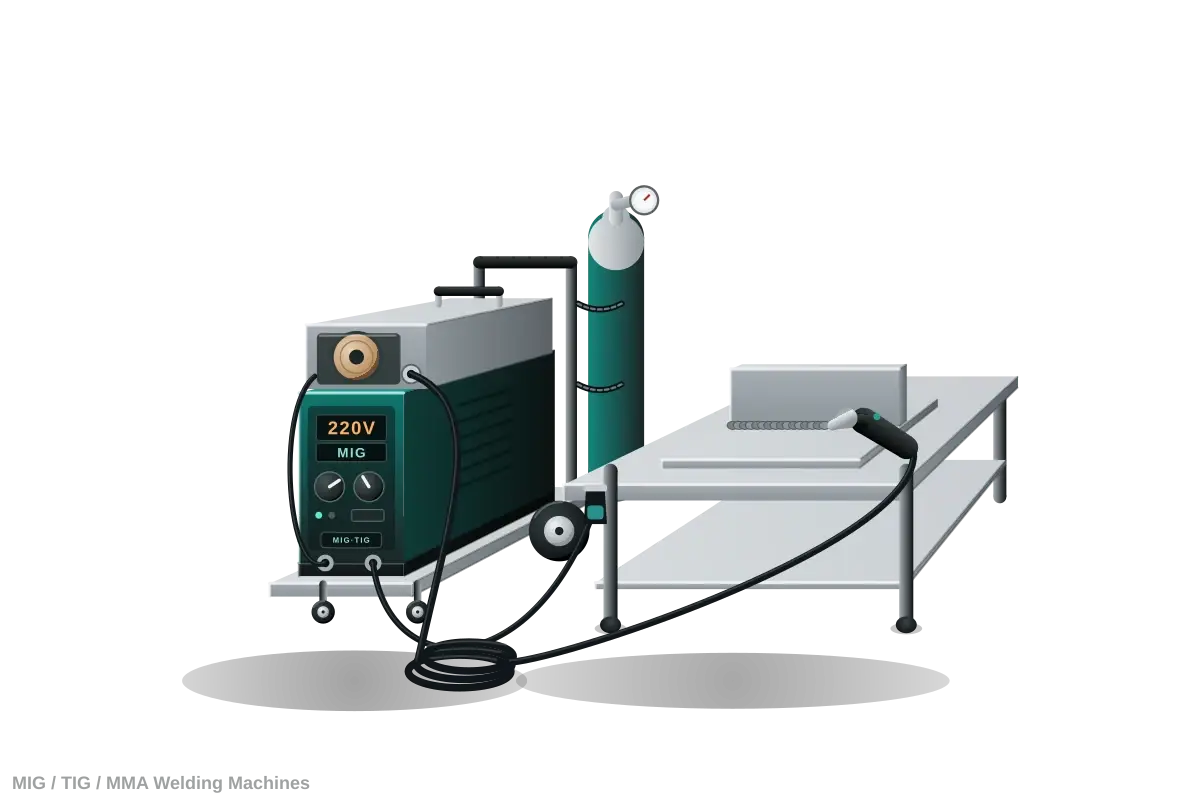
MIG, TIG & Arc (MMA) Welding Machines
MIG, TIG and MMA arc welding machines for 220 V and 440 V supply, customisable to your work. Engineered and built in India, with installation and training.
MIG · TIG · MMAprocesses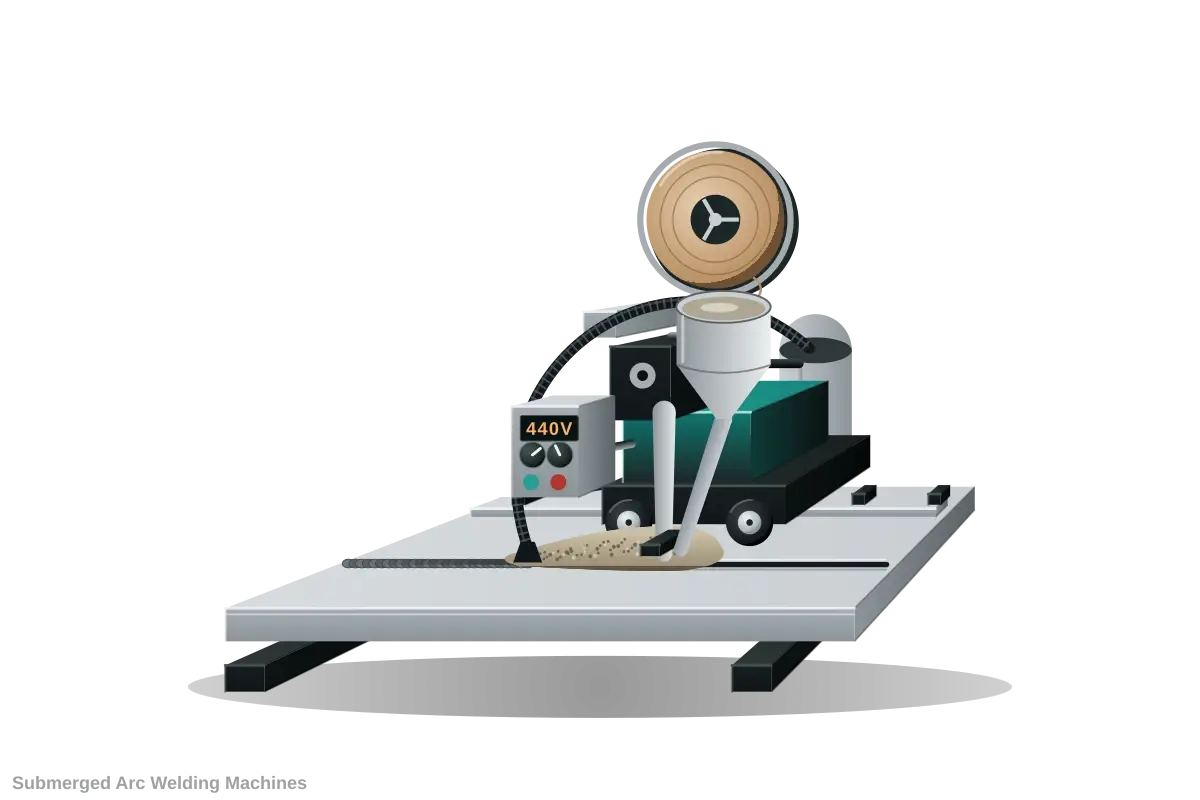
Submerged Arc Welding (SAW) Machines
Submerged arc welding (SAW) machines for 440 V, customisable for long seams on thick plate. Engineered and built in India, with installation and training.
440 VsupplyFAQ
Frequently asked questions
Is a 440 V welding machine stronger than a 220 V machine?
Not automatically. The supply voltage does not set the weld quality; the machine's design and rated output do. What a three-phase 440 V supply allows is higher output for longer periods without straining the supply. A well-specified 220 V machine is perfectly adequate for lighter, intermittent work, while sustained production and heavy sections are better served by three-phase.
Can I run a 440 V welding machine on a single-phase supply?
No, not as built. A three-phase machine needs a three-phase supply, and connecting it to single-phase power will either prevent it from working or damage it. Phase converters exist but add cost and complexity and are rarely a good answer for welding loads. If you only have single-phase power, it is better to specify a single-phase machine from the start.
Why are Indian welding machines labelled 220 V and 440 V when the standard is 230 V and 415 V?
The 220 V and 440 V labels are long-established trade names in India for single-phase and three-phase supply. The nominal standard voltages are 230 V and 415 V, and actual site voltages vary around them. A welding machine is built to tolerate normal variation, so the labels simply tell you which type of supply the machine needs.
Can I run a welding machine from a generator?
Yes, many welding machines run from generators, which is common on construction sites and remote jobs. The generator must be sized for the welding load with a good margin, and its voltage regulation should be stable, because inverter machines can be sensitive to poor generator output. Tell your supplier the generator's rating and type so the machine can be matched to it.
I am outside India. Can a welding machine be built for my local supply?
Yes. Supply voltage, number of phases and frequency vary from country to country, and some regions use 60 Hz rather than 50 Hz. RA Machine customises its welding machines, so state your local supply details at the enquiry stage and the machine will be configured to suit. It is also worth confirming any local plug, isolator or electrical installation requirements early.
Talk to an engineer
Tell us your material, thickness and production volume and we will recommend and quote the right configuration.