
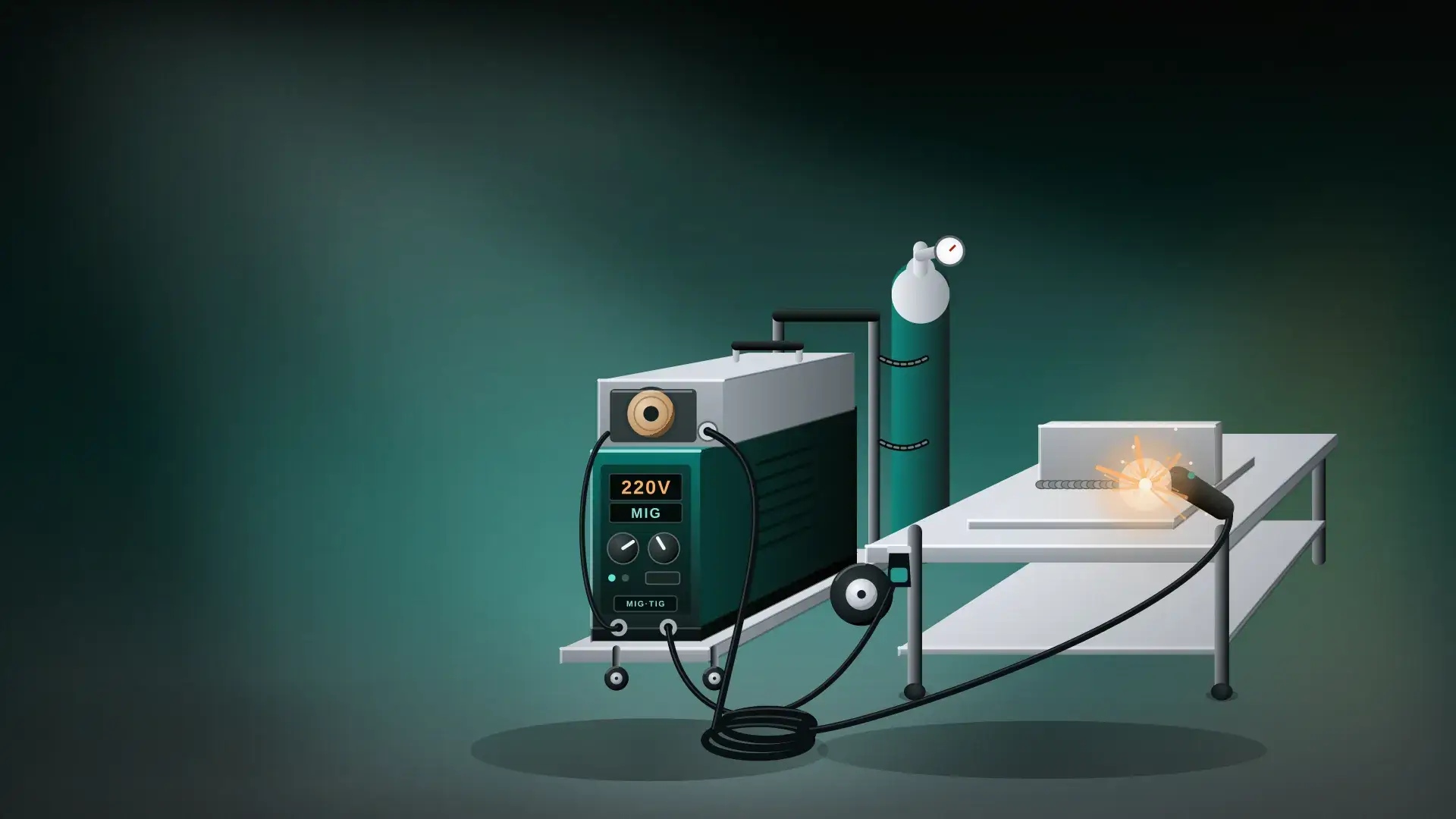
Buyer guide
MIG vs TIG vs MMA (Stick) Welding: Which Process Should You Use?
RA Machine · Updated
What is the real difference between MIG, TIG and MMA?
All three are arc welding processes. Each one melts the joint with an electric arc and protects the molten pool from the oxygen and nitrogen in the air. What separates them is how the filler metal gets into the joint and what does the protecting. Those two details decide how fast you can weld, how much skill the welder needs, what the finished weld looks like and where the process is practical.
In MIG the filler is a wire fed continuously through the torch, and a shielding gas from a cylinder protects the pool. In TIG the arc comes from a tungsten electrode that does not melt, the welder adds filler rod by hand if the joint needs it, and argon does the shielding. In MMA the electrode is a stick of filler metal with a flux coating that burns to make its own gas shield and leaves a layer of slag over the weld.
When is MIG welding the right choice?
MIG, strictly MAG when a carbon dioxide or argon mixture is used on steel, is the workhorse of production fabrication. The welder pulls the trigger and keeps going until the joint is finished, with no stopping to change rods and little slag to chip. That continuous running is why MIG lays more weld per hour than TIG or MMA in most workshop jobs, and why it is the process most often put on a robot.
It is also the quickest of the three to learn. A new welder can produce sound fillet welds on mild steel after a relatively short period of training, although good positional welding and aluminium MIG still take practice. The trade-offs are the gas cylinder, the wire feeder and the fact that a breeze can blow the shielding gas away, which causes porosity. MIG belongs indoors, or behind screens if you take it outside.
- Best for: general fabrication, frames, brackets, tanks, enclosures, agricultural and automotive parts
- Metals: mild steel, stainless steel and aluminium, with the matching wire and gas
- Watch for: spatter on some settings, sensitivity to draughts, wire feed problems with poor liners or tips
When is TIG welding worth the extra time?
TIG gives the welder the most control of any manual process. Heat is set separately from filler, often with a foot pedal or torch control, so the welder can bring the pool in and out precisely on thin material without burning through. There is no spatter and no slag, and a skilled TIG welder produces neat, even beads that often need no finishing.
The cost is speed and skill. TIG is slow because the welder controls the torch with one hand and feeds filler with the other, and it takes considerably longer to master than MIG. It also needs clean material: oil, paint and mill scale that MMA would burn through will spoil a TIG weld. Most shops therefore keep TIG for the jobs that justify it rather than using it everywhere.
- Best for: thin stainless steel and aluminium, food, dairy and pharmaceutical equipment, visible and decorative welds
- Also used for: root passes on pipe, where a clean, fully fused root matters before faster processes fill the joint
- Watch for: low productivity on thick sections, the need for careful cleaning and a trained welder
Why is MMA (stick) welding still so widely used?
MMA is the simplest kit: a power source, an electrode holder, an earth clamp and a packet of electrodes. There is no gas cylinder and no wire feeder, so it goes up ladders, onto structures and into plant rooms that a MIG set would never reach. The flux shield is far less affected by wind than a gas shield, and the process tolerates rust and mill scale better than MIG or TIG.
That makes MMA the natural choice for site erection, structural steel, pipelines in the field, and repair and maintenance work. The downsides are speed and finish. Every few minutes the welder stops to fit a new electrode, and every run must be de-slagged before the next. Electrode choice matters too: different coatings suit different positions and steels, and low-hydrogen electrodes need dry storage to avoid cracking problems on critical joints.
MIG, TIG or MMA: a quick way to decide
Start with where the welding happens and what the weld must look like, then consider the metal and the volume of work. The following rules of thumb cover most buyers.
- Mostly workshop fabrication on steel, with output that matters: MIG
- Thin stainless steel or aluminium, or welds that will be seen or inspected closely: TIG
- Site erection, outdoor work, repairs and maintenance on steel: MMA
- Pipework: often a TIG root followed by MMA or MIG fill and cap runs, depending on the specification
- Thick plate with long straight or circumferential seams: look beyond all three at submerged arc welding
- The same parts made in large numbers: consider putting the MIG torch on a cobot or robot
What else should you consider before buying a welding machine?
Process is only the first decision. The supply at your site matters: a machine for single-phase 220 V suits small workshops and mobile work, while a three-phase 440 V machine suits sustained production welding on heavier sections. Think about how long the machine will weld without a break in a typical shift, because a machine that is comfortable for intermittent repair work may overheat in continuous production.
Next, look at the mix of work. If one process covers most of your jobs and another is needed now and then, a machine configured for more than one process can save floor space and capital. If two welders will be working in different processes all day, separate machines are usually more practical. Finally, count the running costs: wire and gas for MIG, argon, tungsten and filler rod for TIG, electrodes for MMA, plus torches, cables and consumable parts.
How RA Machine helps you choose and set up
RA Machine, the CNC machine division of R.A. Auto Engineering Works in Kolkata, builds MIG, TIG and MMA welding machines for 220 V and 440 V supply. There is no fixed catalogue: we ask what you weld, in what thicknesses, how often and where, and configure the processes, output, controls and accessories to that work.
Installation, commissioning and operator training are included with the machine. After handover we offer remote diagnostics within four working hours, on-site service the next working day around Kolkata and within 48 hours elsewhere in India, stocked spares and a 12-month warranty, with customised extended warranty available on request.
Our range
Machines for this job
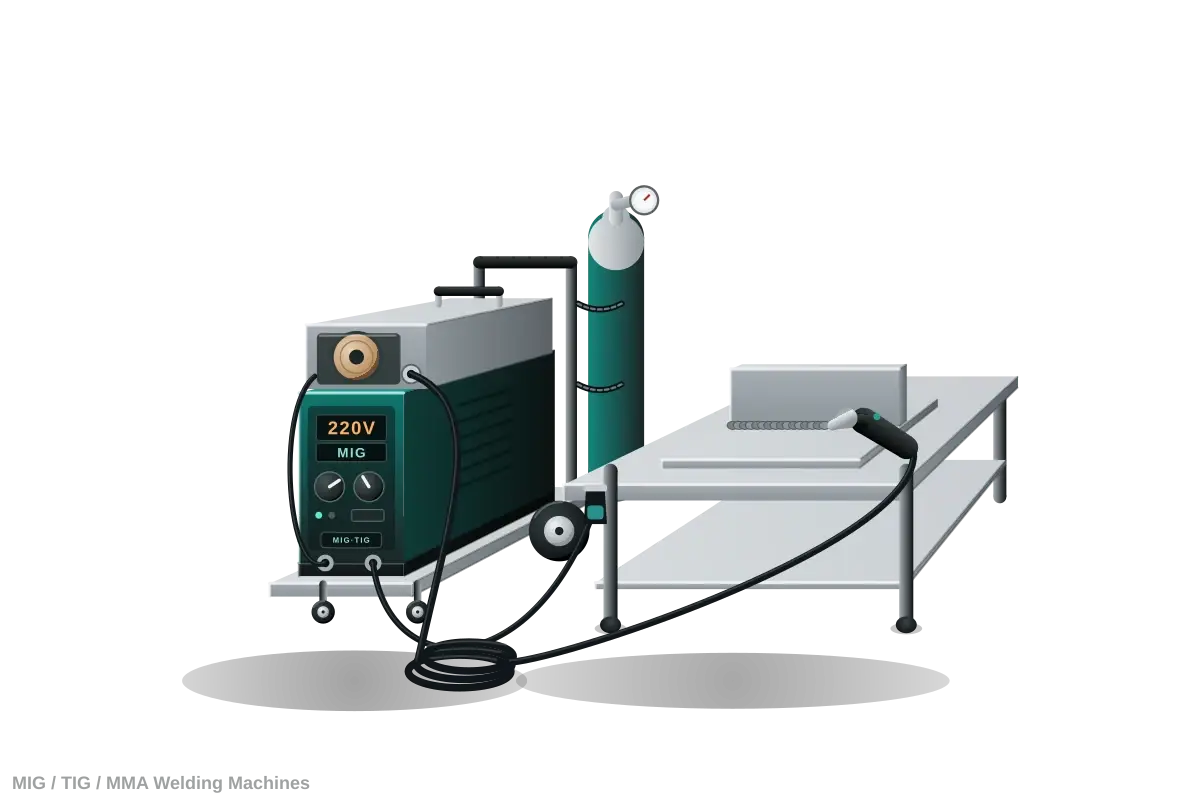
MIG, TIG & Arc (MMA) Welding Machines
MIG, TIG and MMA arc welding machines for 220 V and 440 V supply, customisable to your work. Engineered and built in India, with installation and training.
MIG · TIG · MMAprocesses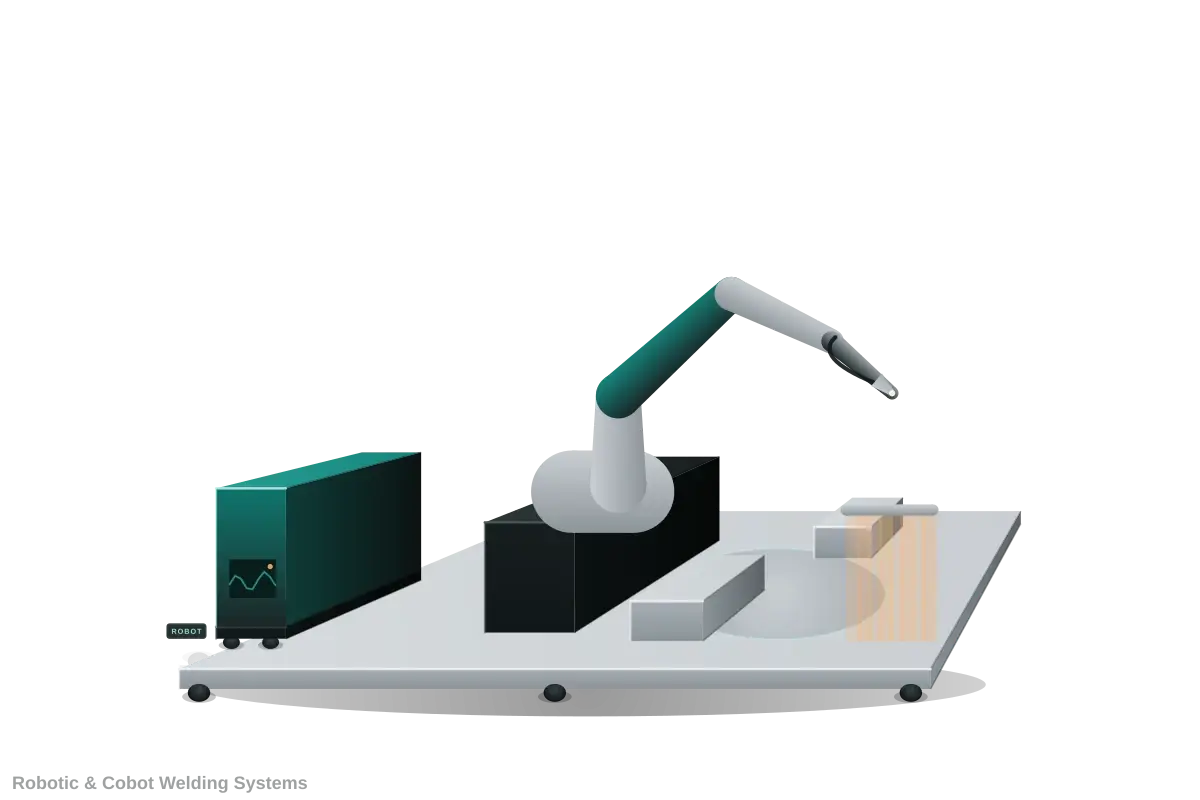
Cobot & Robotic Welding Systems
Cobot and industrial robotic welding systems, configured to your parts and volumes. Engineered and built in India, with installation and operator training.
Built to briefconfiguration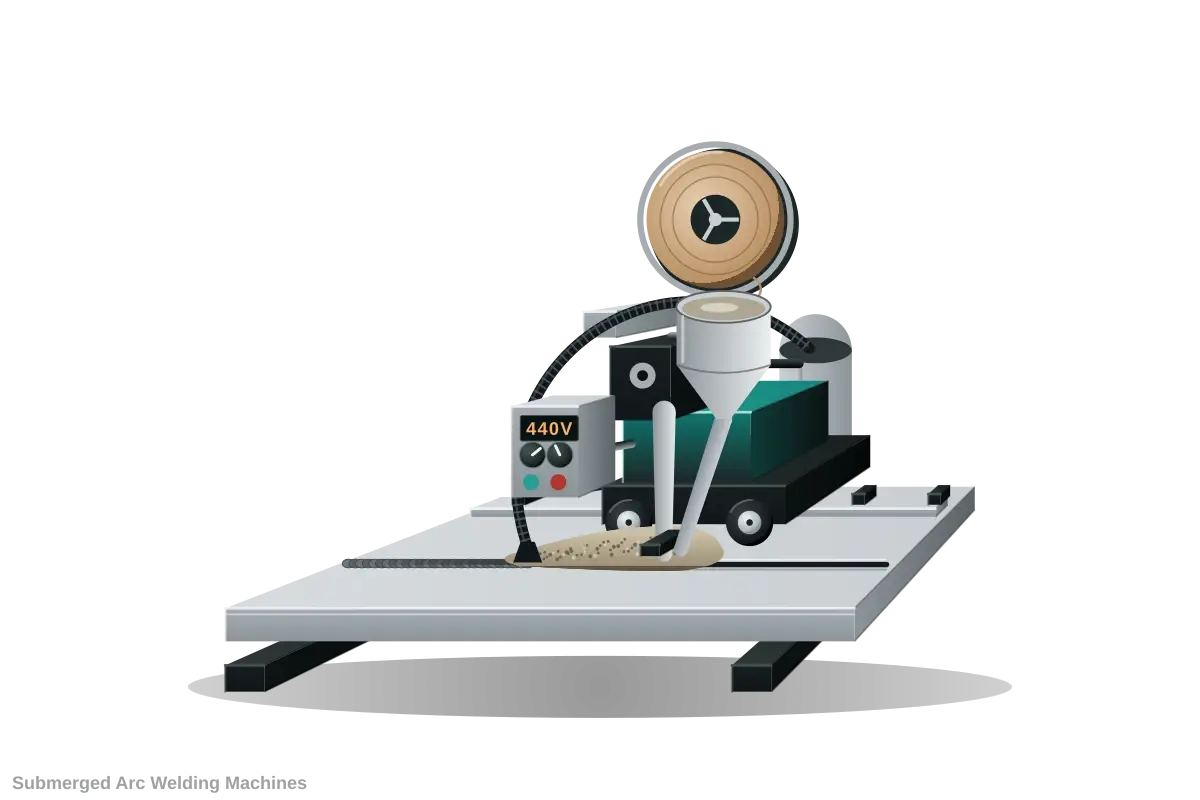
Submerged Arc Welding (SAW) Machines
Submerged arc welding (SAW) machines for 440 V, customisable for long seams on thick plate. Engineered and built in India, with installation and training.
440 VsupplyFAQ
Frequently asked questions
Which welding process is easiest for a beginner to learn?
MIG is usually the easiest to start with, because the wire feeds automatically and the welder only has to control torch angle, distance and travel speed. MMA takes a little longer, as striking and maintaining the arc with a shortening electrode needs practice. TIG is the hardest, since the welder coordinates the torch, filler rod and heat control at once. Proper training shortens the learning curve for all three.
Which process gives the strongest weld?
None of the three is inherently stronger. A correctly made weld with the right filler for the base metal will match or exceed the strength of that metal in MIG, TIG or MMA. Strength problems come from poor fusion, porosity, cracking or the wrong consumable, not from the process name. Choose the process that suits the job and the position, then follow a sound procedure and use trained welders.
Can I weld aluminium with MMA?
Aluminium electrodes for MMA do exist, but the results are rarely as good as MIG or TIG, and they are mostly used for occasional repairs. For regular aluminium work, TIG is preferred on thin material and visible welds, while MIG is preferred for thicker sections and production. Both need clean material, the correct filler alloy and pure argon or an argon-based shielding gas.
Why does my MIG weld have holes in it when I work outdoors?
Small holes, called porosity, usually mean the shielding gas has been disturbed. Even a light breeze can blow the gas away from the weld pool, letting air contaminate it. Screens, a higher gas flow within sensible limits or moving the work indoors can help. For regular outdoor work, MMA or a self-shielded flux-cored wire is usually the more reliable choice than gas-shielded MIG.
Is TIG welding only for stainless steel and aluminium?
No. TIG welds mild steel, copper, titanium and many other metals well. It is most associated with stainless steel and aluminium because those jobs often demand clean, controlled welds on thin sections, where TIG's precision pays off. On ordinary mild steel fabrication, TIG works but is usually too slow to justify, so MIG or MMA does the bulk of that work.
Talk to an engineer
Tell us your material, thickness and production volume and we will recommend and quote the right configuration.